

What Happens From Measurement to Final Fit
Understanding the countertop installation process helps you know what to expect before work begins. Most projects follow the same path: measure the space, remove old surfaces, prepare cabinets, set the new slab, and seal everything in place. When each step is done with care, your counters look clean, level, and ready for daily use.
What You Need Before Starting
Before countertop installation begins, a few things must be ready. Good prep keeps the job smooth and avoids delays.
- Final material choice, such as granite, quartz, or laminate
- Accurate measurements of cabinets and walls
- Clear access to the kitchen or bathroom
- Plumbing and appliances disconnected if needed
- Strong, level cabinets that can hold the weight
Heavy stone counters need solid base cabinets. If cabinets are loose or uneven, they may need repair first. This part often falls under home improvement planning, since it affects how long the project takes.
Step-by-Step Process
Here is how countertop installation usually works from start to finish.
- Template and measurements: Installers take exact measurements or create a template. This helps the slab fit tight against walls and corners.
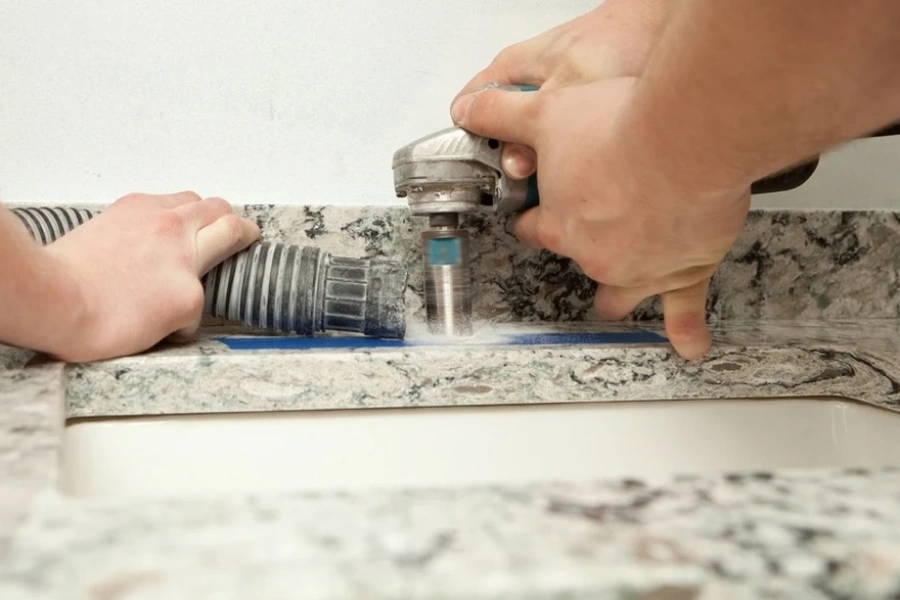
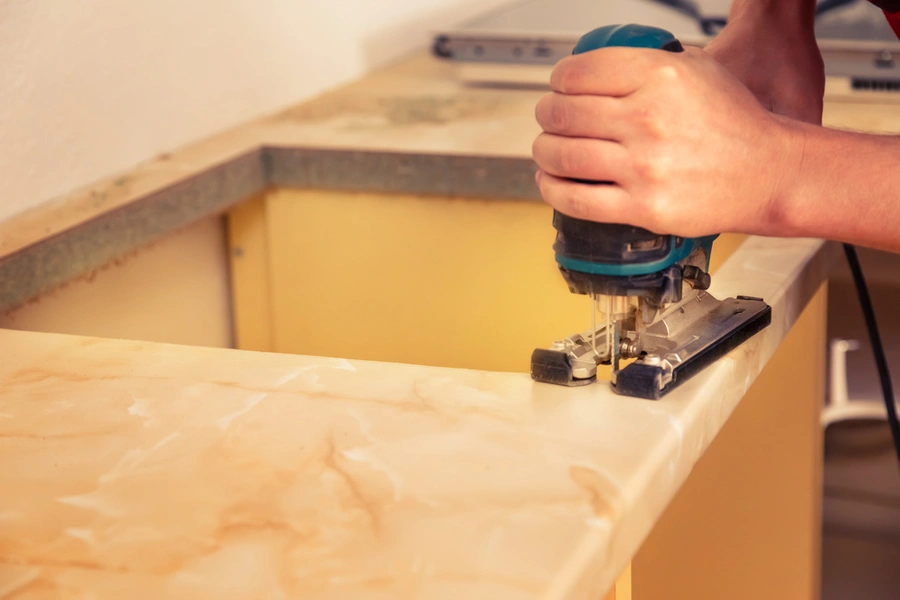
- Material cutting: The slab is cut to size. Sink and cooktop openings are made at this stage.
- Old countertop removal: The existing surface is removed with care to avoid damage to cabinets or walls.
- Surface prep: Cabinets are checked for level and strength. Shims may be added to create a flat base.
- Setting the new countertop: The new slab is placed and adjusted. Heavy materials may need more than one person.
- Seaming and sealing: Seams are joined with adhesive. Stone surfaces are sealed for stain protection.
- Reinstall plumbing and appliances: Sinks, faucets, and cooktops go back in place once adhesive sets.
Most kitchen jobs take one to two days for installation, not counting material fabrication time.
Common Mistakes to Avoid
Many issues happen because of poor planning or rushed work. Here are common mistakes homeowners make:
- Choosing material before checking cabinet strength
- Forgetting to measure backsplash height
- Not planning for overhang space on islands
- Ignoring seam placement
- Trying to reuse old plumbing parts that leak
Even a small measurement error can cause gaps or uneven edges. Once a slab is cut, changes are hard to make. Care during the early steps saves time and money later.
When to Call a Professional
Some homeowners think about doing countertop installation on their own. This may work for light laminate tops. It is much harder with granite, quartz, or concrete. These materials are heavy and can crack if handled the wrong way.
You may want expert help if:
- The countertop material is natural stone or quartz
- Your kitchen has many corners or angles
- You need precise cutouts for sinks or cooktops
- There are uneven walls or older cabinets
Professionals use specialty tools to cut and polish edges. They also know how to move heavy slabs without damage. A clean install helps your counters last for many years.
Final Recommendation and Next Step
If you are planning countertop installation in Hallandale Beach, FL, getting clear measurements and choosing the right material are the first smart steps. Our team at Shining Stone handles each part of the process with care, from template to final seal. We work closely with homeowners to avoid surprises and keep the space clean and safe. If you have questions or want to schedule a consultation, call us at (786) 395-1865 and we will be glad to help.